Total price:
How to stay in good shape during the winter months?
By walking!
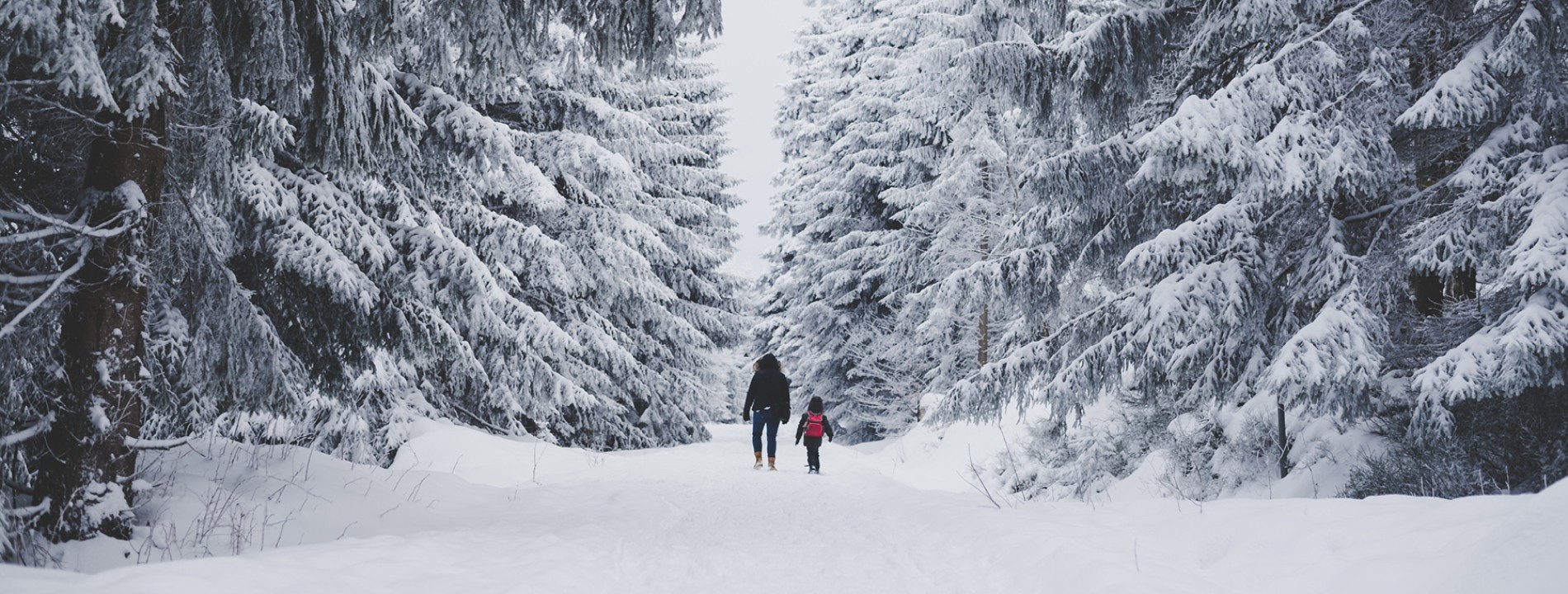
Colder days are approaching, but nature is beautiful and always has something appealing to offer. Time spent in nature changes our state of mind, fills us with life energy, relaxes us, and brings new ideas. After a long workday spent indoors, it feels especially good to breathe freely in nature.
Anita Možgan, Professor of Physical Education, Personal Trainer at Terme Šmarješke Toplice
I would like to encourage you to regularly spend time outdoors in the fresh air.
No matter whether it is cold, rainy, foggy, or sunny – every kind of weather has its beauty. Let your walk be your time, when you can enthusiastically observe dew, clouds, and birds like a small child, touch forest fruits and tree bark, lie down in spring-green grass, soft autumn leaves, or make snow angels on a snowy blanket. The more you allow yourself to surrender to the moment and enjoy what you see, the calmer and more satisfied you will return from your walk. Even if you feel tired, your body and mind will be grateful that you pushed yourself and allowed yourself these healing steps.
They say there is no bad weather, only bad clothing. Movement in nature is always beneficial if you know how to observe – magical mist, raindrops on leaves, the swaying of treetops in the wind, stars in the sky … You just need to adapt your clothing and footwear to the conditions.
A few tips for winter walking
-
Breathe deeply through your nose
Cold air strengthens the mucous membranes, supplies cells with oxygen, and gradually increases resistance.
-
Upright posture – deep inhale, slow exhale
Straighten up, open your chest, and exhale slowly – this calms and relieves tension.
-
Pick up the pace, include uphill walking
This warms you up, boosts circulation, and strengthens the heart, blood vessels, respiratory system, and muscles.
-
Focus on what you see and hear
Kindly let go of negative thoughts – it will relax you and restore a sense of well-being.
How much should you walk daily?
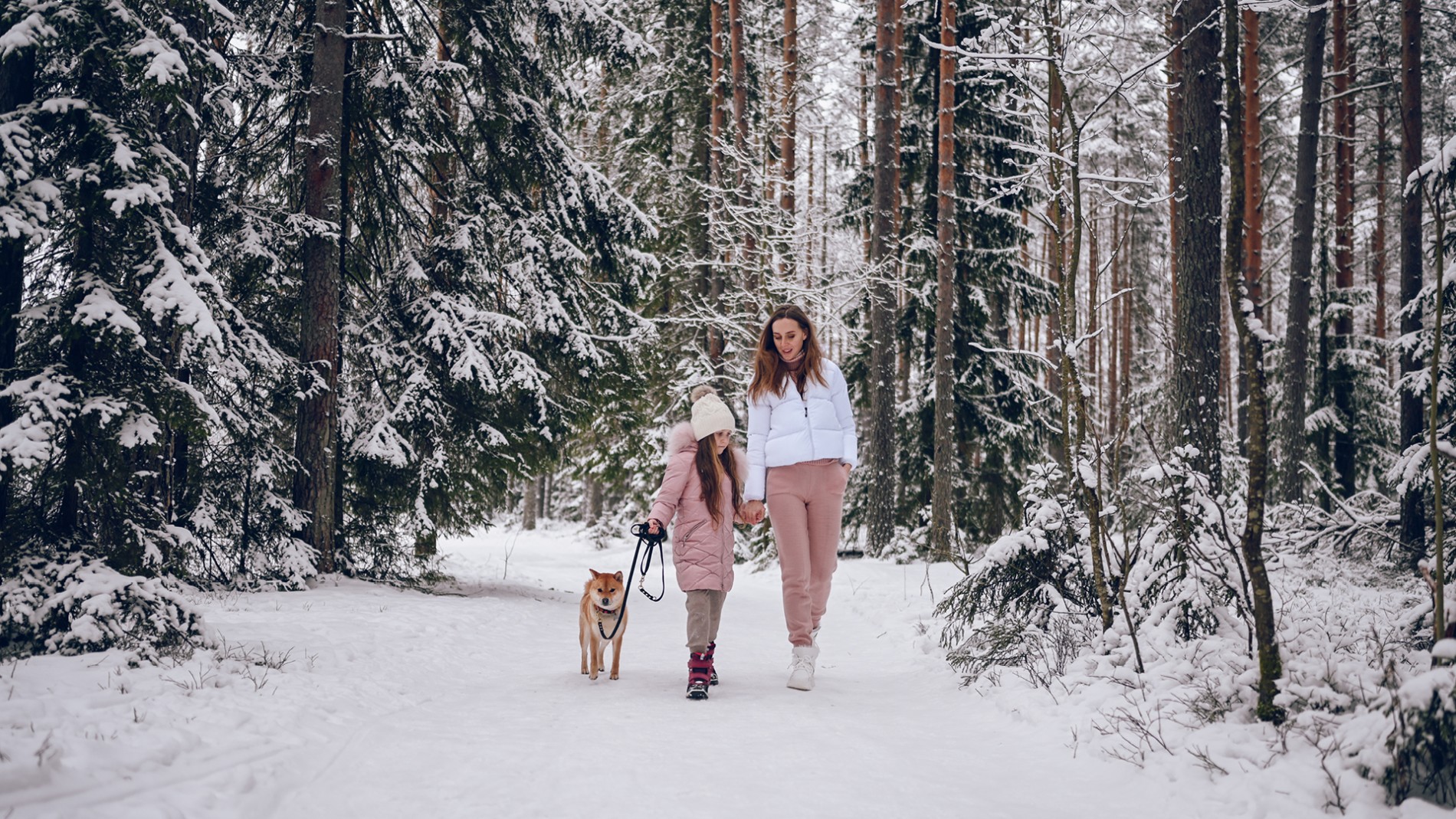
Walking used to be something completely normal; our ancestors – our grandparents and their parents – walked up to 30 kilometers a day. Today, the “daily mileage” has dropped to just one or two kilometers!
My recommendation is to walk every day.
By this, I do not mean only essential movement such as shopping or household chores, but additional steps, such as walking to work, taking the stairs instead of the elevator, or visiting a nearby hill. It is important to set a clear goal. For example: I will walk at least 7,000 steps or five kilometers a day, or I will take 700 steps every hour.
If you are unable to walk that much due to illness or mobility limitations, or if you enjoy another form of physical activity, such as cycling, adjust your goal accordingly. Then gradually increase the amount of activity and slowly but steadily improve your physical fitness.
How should we walk?
At first glance, this may seem like a funny question, as it is generally believed that we know how to walk. Indeed, we learned to walk as children, around the age of one. However, if we move too little, we need to relearn this skill; otherwise, injuries or degenerative changes will force us to do so.
When walking, posture, arm movement, and foot placement are important. The recommended basic walking technique includes an upright posture, gaze directed forward, a relaxed neck, a spine in a neutral, upright position, and a step that is appropriately long and natural. The feet should be aligned in the direction of movement, set hip-width apart, slightly turned outward, and arm movement should be coordinated with walking speed.
“Magical” (Nordic walking) poles
Nordic walking poles provide support while walking and relieve the joints – knees, ankles, and hips – thereby reducing strain on the spine. If these issues are already present, there are even more reasons to use them.
By pushing and extending the arms backward, the arms become stronger, especially the triceps, which are not used as much in everyday life. The chest opens, posture becomes more upright, and with a slight forward lean and a shift of the center of gravity, the diaphragm is strengthened and all back muscles become more active.
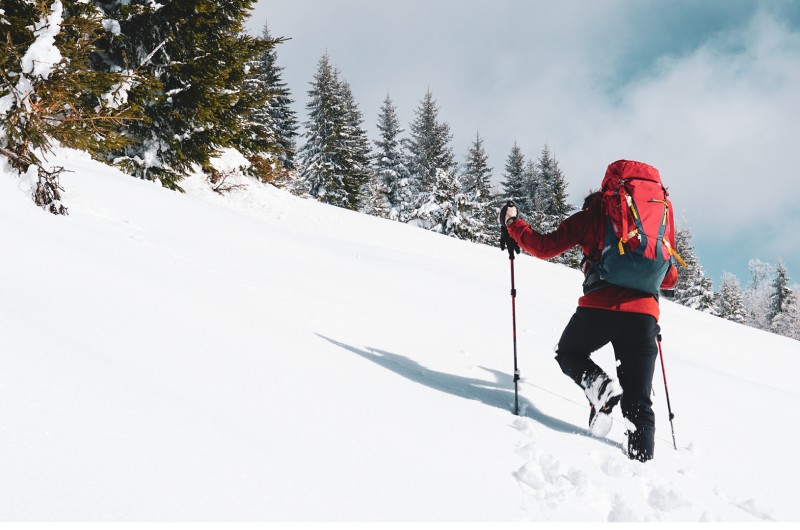
Due to the more active work of the arms and torso, walking with poles can burn up to 30 % more energy.
Experts especially recommend using poles for those who have difficulty walking, have overweight or joint problems, or have poor balance.
Once we learn to use the poles correctly and get used to them, everything becomes much easier.
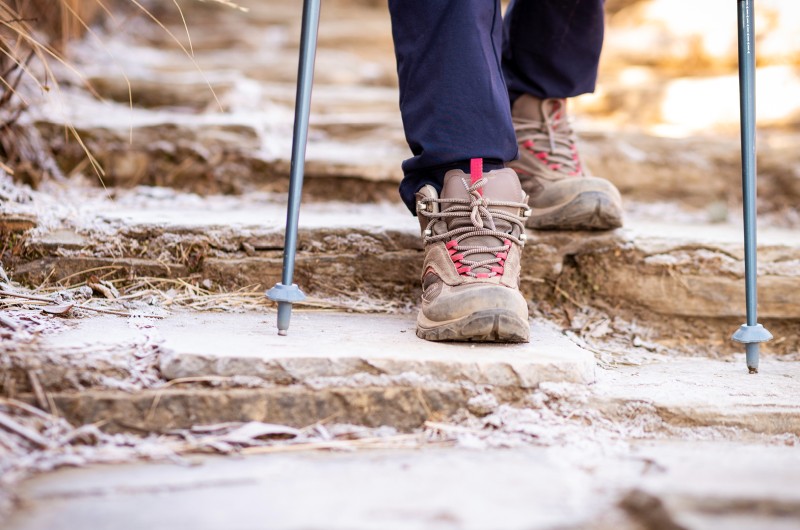
The right footwear is extremely important
Shoes for recreational walking should be primarily comfortable.
They should fit well and have enough room in the toe area so that the toes can spread and push off the sole during each step. There should be about a finger-width of space in the toe area. If the shoe is too small, the toes press into the tip when walking downhill, which can be very painful and may cause nail injuries.
The weight and sole of the shoe are also important – shoes should be as light as possible and have a rubber sole. The sole and shoe height should match the terrain. When there is a higher risk of slipping or obstacles like stones, branches, or rocks, the shoe should be higher, cover the ankle, and provide good grip. On grassy or well-prepared paths, a low hiking shoe is sufficient. Those walking on asphalt or tartan tracks should choose shoes with a less aggressive sole that also cushions the step.
Race Walking
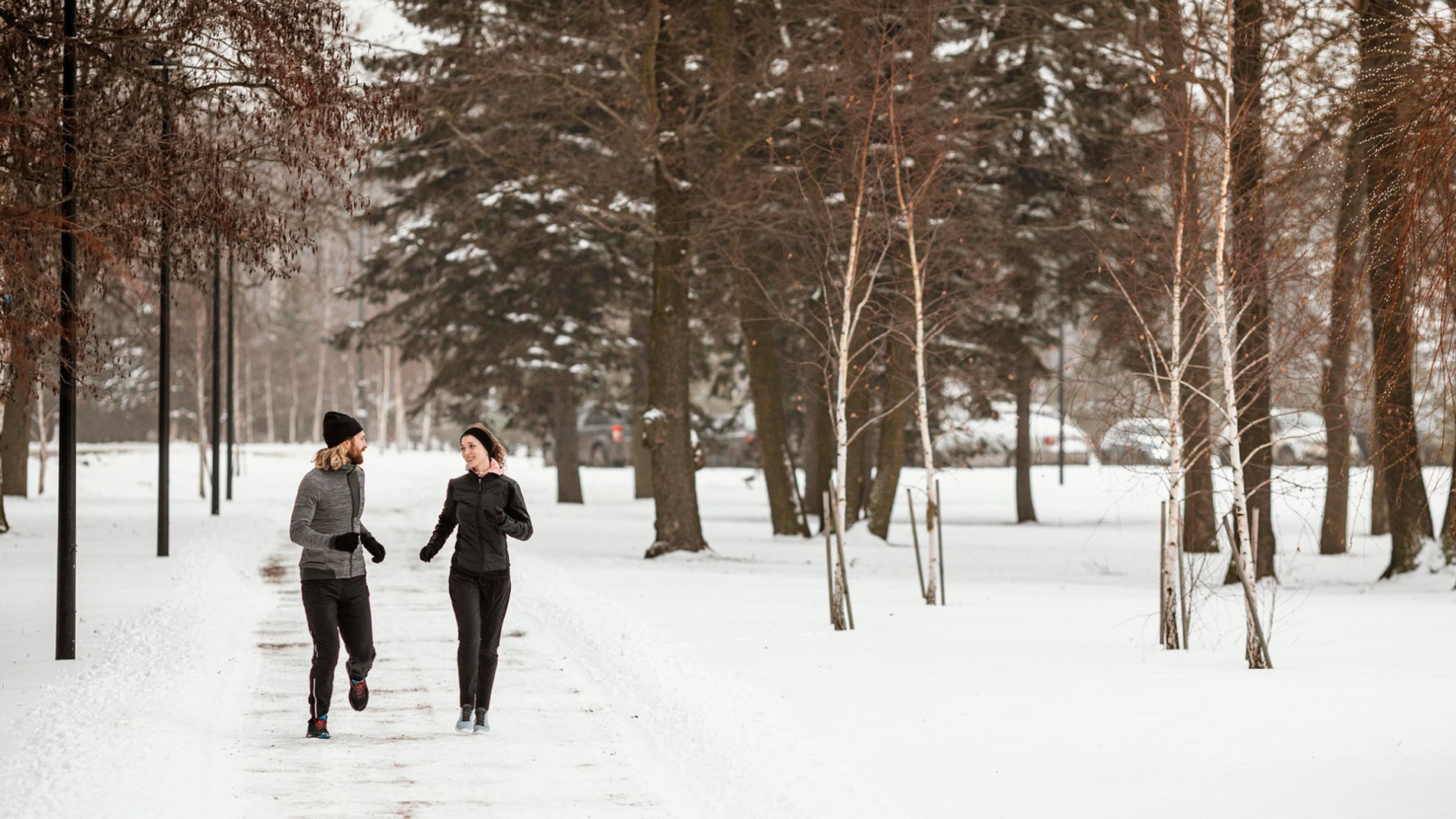
Race walking is also a sport and has been an Olympic discipline since 1906. It requires very good physical fitness and endurance, as distances of 20 or 50 kilometers are covered. Strict rules apply to foot placement – at every step, one foot must be in contact with the ground, and one leg must be straightened.
Competitors use hip movements and active arm swings, with the arm position resembling running. Athletes can complete a 10-kilometer distance in just 37 minutes.
Summary: Recreational race walkers are about twice as fast as average walkers, who cover 4–6 kilometers per hour for leisure.
With years of active practice, this type of walking can be technically refined, and the distance walked can be increased.
Most people walk at an average speed of 4 to 6 kilometers per hour. Under different conditions, with obstacles, slopes, or physical limitations, the speed is lower, about 3 to 4 kilometers per hour.
Breathing indicates what speed is sufficient
Walking speed depends on individual fitness, as well as the terrain, slope, and surface. The ability to manage inclines is also influenced by the landscape in which a person grew up – for someone who has always lived on perfectly flat land and is not used to inclines, even a small slope can be a challenge.
Until we can walk fast (20–30 minutes at a conversational pace without breathing difficulties), start with two minutes of brisk walking, followed by 30 seconds of recovery, then gradually increase intensity: speed up, and every five minutes walk one to two minutes very fast to get out of breath and raise your heart rate to about 80 % of your maximum.
The intensity is then slowly increased until you can walk briskly for at least half an hour continuously.
Healthy people can “roughly” determine their maximum heart rate by subtracting their age from 220.
Focus on yourself and your abilities
Do not compete with someone who is physically fitter than you. Follow your own pace and abilities. Adjust speed, terrain, relaxation, and social interaction to yourself. If you walk with someone faster, they must adjust to you. This is especially important on longer, more demanding hikes. Pain, unnecessary complications, and injuries often occur because we overestimate our abilities.
Anita Možgan is a physical education teacher, Nordic walking instructor, and personal trainer who has been motivating guests at Terme Krka for over 20 years, advising them and helping them discover the right form of exercise for better well-being and stronger health. On guided walks around Terme Šmarješke Toplice, she advises guests on walking technique and optimal recreational training.
Related content
-
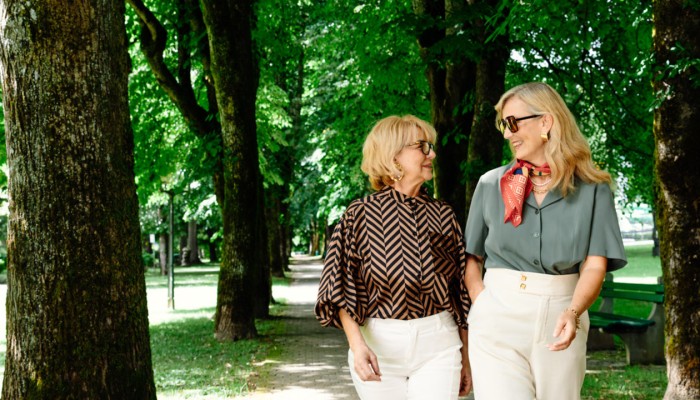
Longevity is not only about living a long life, but about living one that is high in quality, independence, and fulfilment.
How to live so that we can enjoy an active and independent old age?
-
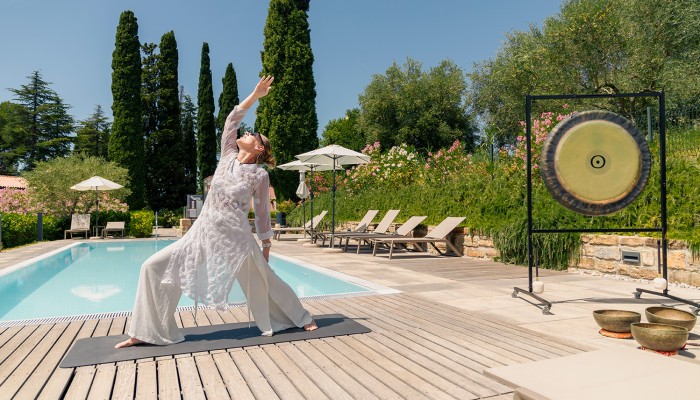
Klavdija Moškon Belina, Yoga Teacher and Organiser of Sports and Cultural Activities at Talaso Strunjan
Yoga – A Versatile Exercise That Knows No Age Limits
-