Total price:
Katja Žugman
Let’s recognize our needs through mindfulness and relaxation exercises
When life begins to tip into its second half, many people start turning inward, toward themselves. We reflect on what we have already accomplished, and the question arises: “What is truly important to me?”
This period can also awaken restlessness and distress, yet at the same time it is a beautiful opportunity to deepen our connection with ourselves—a time to reflect on how we wish to continue our path. During this time, mindfulness and other psychophysical activities that calm us and strengthen awareness can be a great support.
It is never too late to learn and to strengthen our inner power and self-belief. The brain is elastic and capable of learning until the very end. The same applies to our body. The vitality within us is always seeking the right path.
Mindfulness brings more calmness and a sense of safety into our lives. It works as if we were sewing a parachute every day, so that we can open it when we need to jump out of a plane.
Relaxation and mindfulness – related skills that contribute to a more satisfying life
The two skills have similar effects, yet there is an important difference between them.
Both lead to a calmer, more satisfying life and to experiencing stress less intensely. However, mindfulness is something more. To be mindful means to be “awake” – to know where I am, what I am doing, and why I am doing it. Through mindfulness, we strengthen our presence, awareness of experience, and connection with ourselves. We direct our attention to what is happening in the present moment. We observe this moment and accept it as it is, with curiosity and without judgment or evaluation.
When we practice mindfulness, we are actually practicing a way of “being,” rather than living unconsciously as if guided by an autopilot, or living only with a focus on work and achieving important goals. When we practice mindfulness, we simply – are.
The main purpose of relaxation techniques, on the other hand, is the immediate reduction of tension and unpleasant feelings. With these techniques, we aim to achieve a specific goal, but they do not provide space for open, curious exploration of our inner experience in the same way mindfulness does.
Research shows that mindfulness enables more lasting and deeper satisfaction, as well as more enduring benefits for mental and physical health. Because of this, we also naturally become more grateful, gentle, and compassionate—toward others and toward ourselves. We cope more easily with life’s challenges because we are calmer within and rely more on ourselves. Mindfulness works as if we were sewing a parachute every day so that we can open it when we need to jump out of a plane.
When to choose relaxation exercises and when mindfulness practices
Mindfulness needs to be practiced regularly; it is a skill that must be patiently integrated into everyday life—and when we encounter challenges, we will be better able to accept and handle them.
Relaxation exercises, however, are best chosen when we are experiencing strong emotions or physical tension that we feel we cannot manage at that moment—when it exceeds our tolerance and we wish to calm down.
It is important to explore and discover what is best for us in a given moment, and to practice both skills with compassion and kindness toward ourselves.
Meditation for developing mindfulness – three steps of breathing
This is a simple exercise you can do at any time during the day. It helps you step out of “autopilot” and connect with the present moment. The exercise is performed in three steps, each lasting at least one minute.
Step 1: Awareness of the present moment
Invite yourself into the present moment. First, straighten your posture into a dignified position and close your eyes. Then gently direct your attention to your current experience. You may ask yourself: “What am I bringing into this moment?” Try to observe—what emotions are present, what sensations, needs, or thoughts are coming to the forefront. Become aware of what you are experiencing. Even if it is unpleasant, try to observe with curiosity, openness, without judgment, and with acceptance.
Step 2: Direct attention to the breath
Gently shift your attention to your breathing. Simply observe—inhalation, exhalation—without changing the rhythm. The breath can serve as an anchor… when your attention wanders, don’t get upset; just notice where it went and gently bring it back to the breath.
Step 3: Expanding attention to the body
Expand your field of awareness from the breath to the sensations of the whole body, as if the entire body were breathing. Also become aware of the space around you and everything present in this moment. Feel your body from feet to head and follow the breath—inhaling into the whole body, exhaling from the whole body.
At the end of the meditation, you may ask yourself again: “How do I want to continue this day?”
Breathing exercise for greater heart rate variability
After your mindfulness minutes, you can take another 10 minutes for a breathing exercise that has been shown to increase heart rate variability. Greater heart rate variability indicates a healthy, flexible autonomic nervous system and a strong ability to activate the parasympathetic nervous system, which is responsible for rest, regeneration, and calmness of the body.
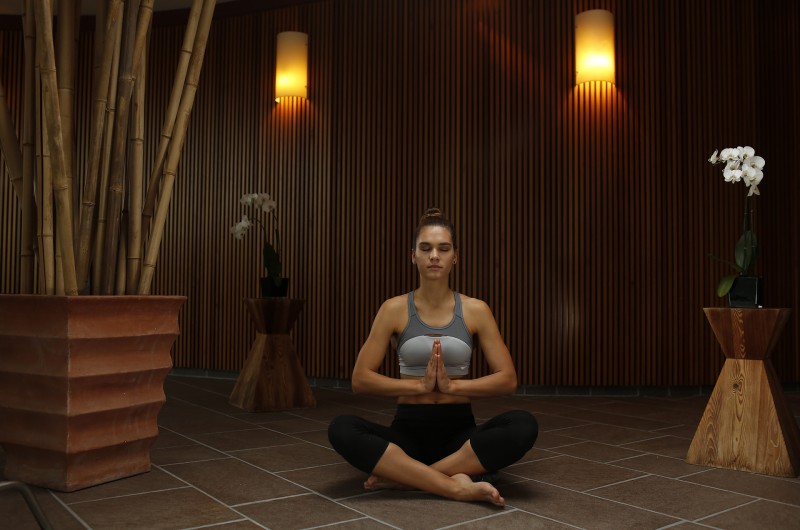
How to perform this exercise
Take 6 breaths per minute – the inhalation should last 4 seconds and the exhalation 6 seconds. Breathe using your diaphragm. Continue this way for 10 minutes.
If you have any cardiovascular or respiratory condition, be cautious with this exercise, as this type of breathing alters processes in the body. Observe whether the exercise feels comfortable for you. You can adjust the duration if needed.
Group mindfulness sessions and relaxation breathing exercises can be experienced and tried free of charge during your stay at Terme Dolenjske Toplice.
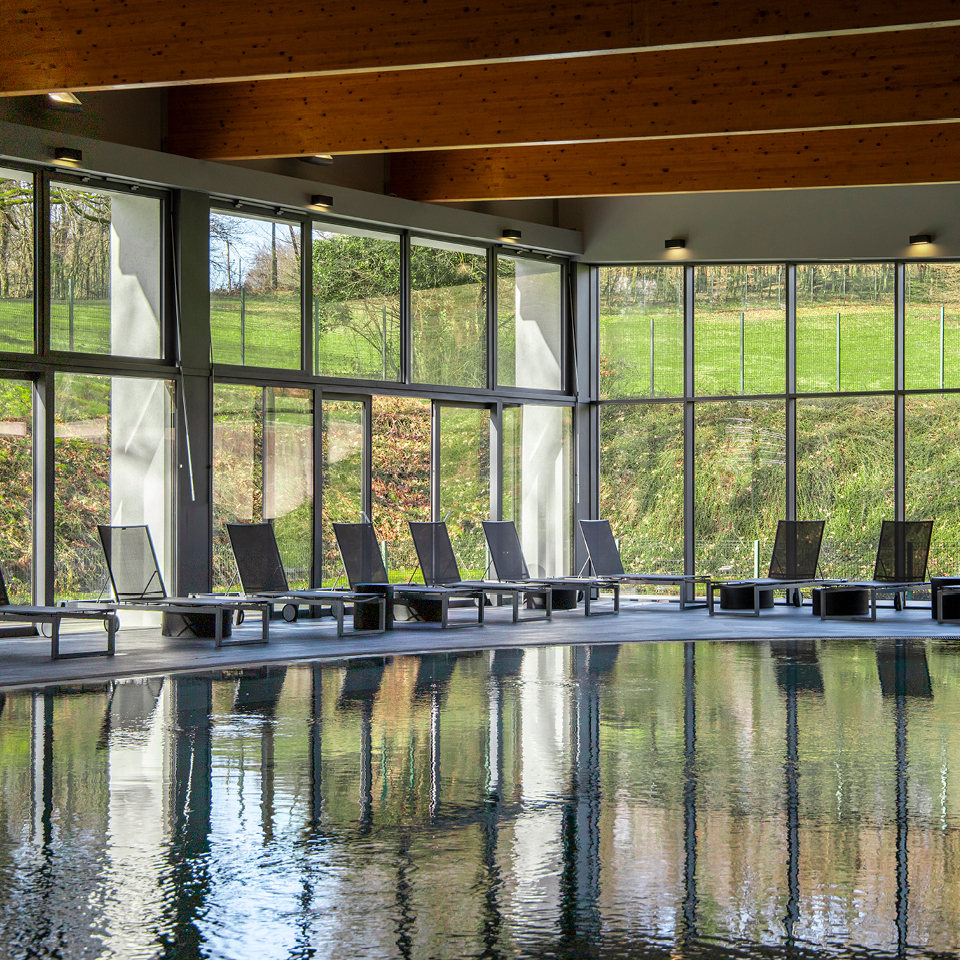
Spa break at Otočec
Hotel Šport**** is a synonym for excellent cuisine, diverse sports activities and picturesque nature.
Active vacations
10300€
(per person, per night)
Related content
-
-
To make your summer even more relaxing and joyful, it’s good to adjust your diet a little.
Food for beautiful, healthy skin and a flat belly
-